ISN is the global leader in contractor information management, serving enterprise clients who need to verify that workers meet compliance requirements before they set foot on a job site. The Empower app was their first direct-to-worker product: a B2C mobile app giving industrial workers digital access to their credentials, training records, and compliance documentation. For many of these workers, it was their first direct digital access to their own professional records. I led an eight-week discovery effort and owned end-to-end product strategy and experience design from stakeholder alignment through delivery. The product earned a Golden Stevie Award in its first year.
CONTEXT
A compliance tool built for the people who actually carry it.
ISN was a legacy-oriented company taking its first step toward a worker-facing model. The product had to work for users with varying technology proficiency in challenging field conditions, while navigating stakeholders with different views on what the product should be and how fast it should move. Both required active management throughout the eight weeks.
DIGITAL CREDENTIALS
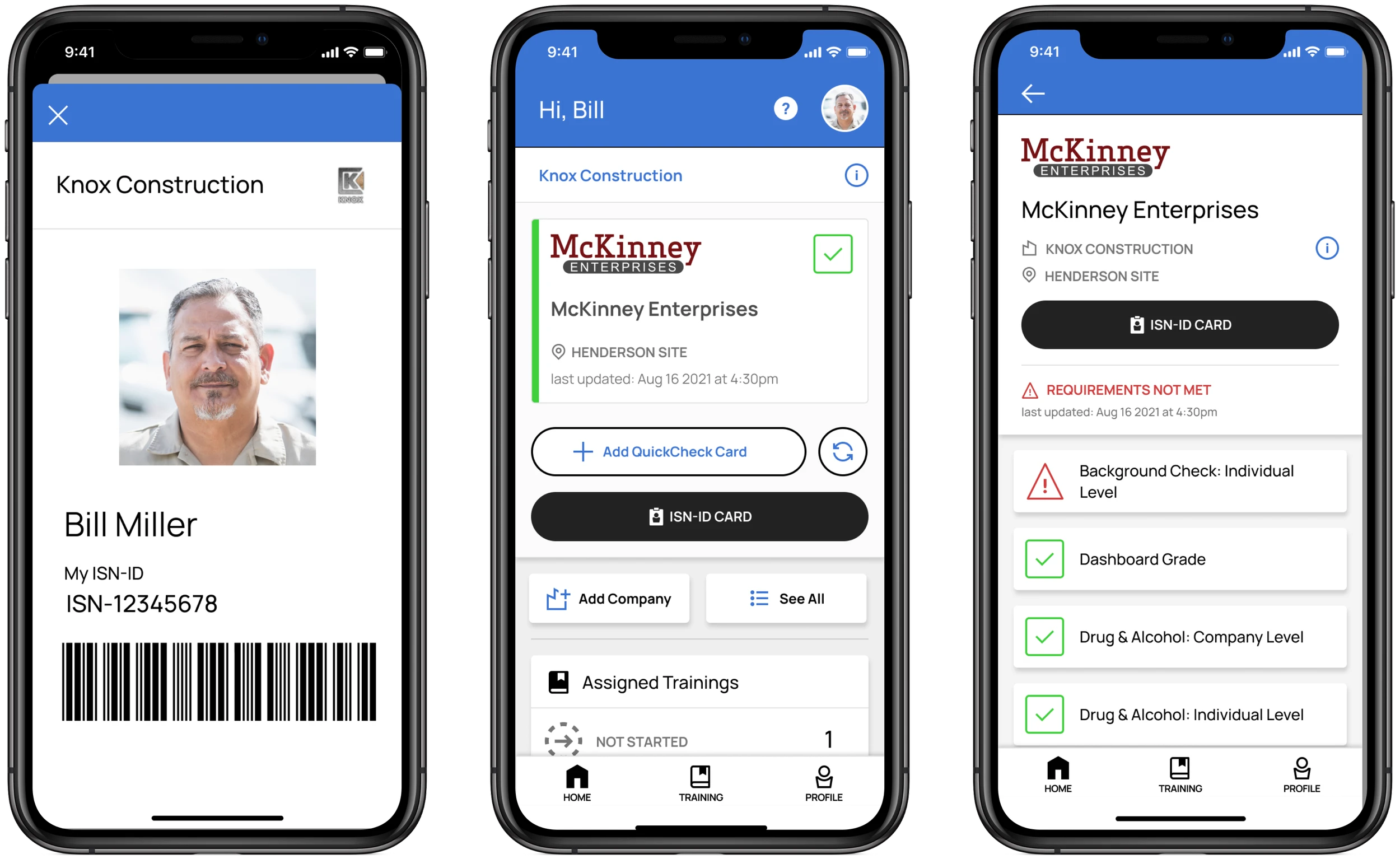
Workers needed to prove compliance before entering job sites, often under time pressure and in low-light or outdoor conditions. The existing process relied on paper records and manual lookups across multiple systems.
The app created a digital ID card compatible with scanners already in use in the field, and queried credentialing systems to provide on-demand proof of compliance. Requirements could vary by job site, date, and worker role. The app handled that variability without exposing it to the user. Clarity and reliability took priority over sophistication.
DOCUMENTS AND VERIFICATION
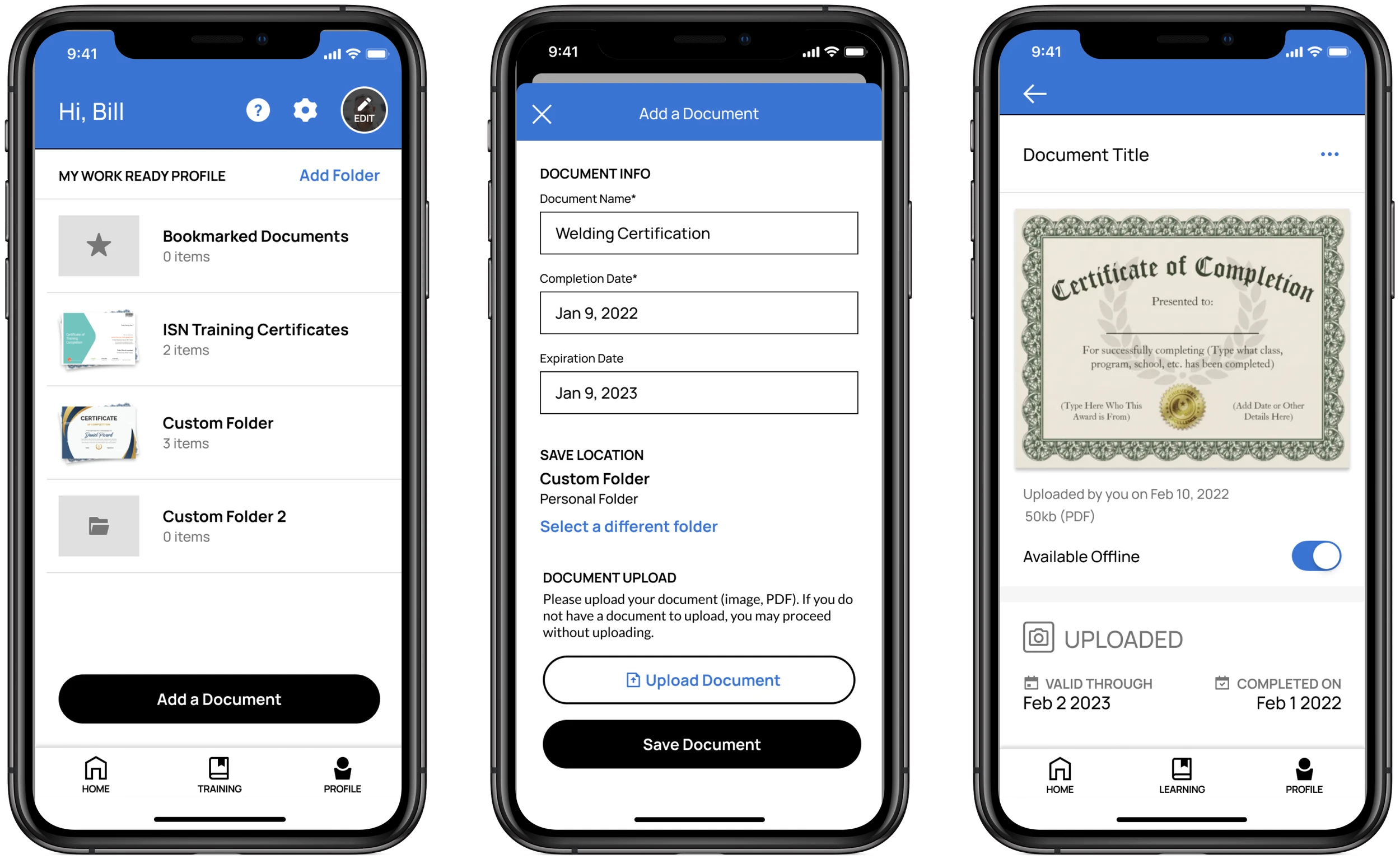
Workers needed to upload, access, and present compliance documents across different contexts. The solution had to account for varying user personas, data privacy requirements, and the need for offline access in areas with unreliable connectivity.
Users could upload documents securely, which were routed through an automated verification workflow. Verified documents could be viewed on demand, with key attributes immediately visible. Offline availability ensured that workers in areas without reliable connectivity could still present credentials when it counted.
TRAINING ACCESS
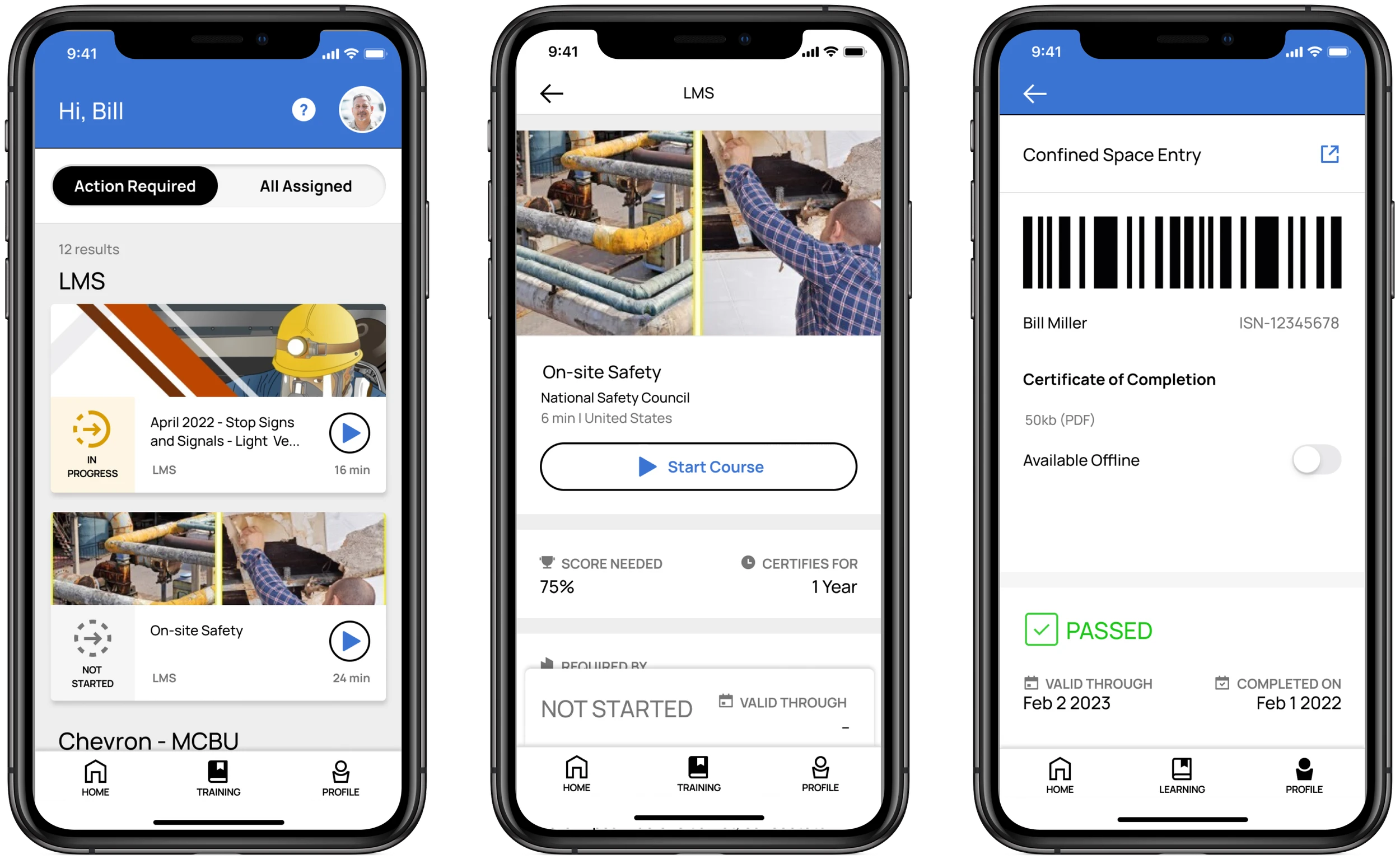
Many compliance requirements involved digital training materials that had previously been very difficult for this workforce to access. Compounding the design challenge, those materials came from many different external providers with significant differences in structure and rules.
The app created a personalized training library that absorbed that complexity on the back end and presented a consistent experience on the front. Workers could browse assigned courses, see all requirements before starting, track their progress, and retrieve completed certificates on demand. Training that previously required scheduled access or special equipment became available on the worker's own time, on their own device.
STAKEHOLDER COMPLEXITY
ISN's new leader had a clear appetite for big moves, not incremental ones. That ambition created real pressure on systems that were complex and entrenched, and it kept the roadmap in motion throughout the engagement. Features were added, reconsidered, and reprioritized regularly. The timeline was not.
The design team had to work across dozens of features and variations while carefully limiting dependencies between them, because the final MVP decision was going to come very late. Designing for that kind of optionality required keeping every decision visible. Leadership needed a clear view of what was in play, what each choice would cost, and what would have to give if priorities shifted again. That transparency was not a reporting function. It was how we protected the timeline and kept the product shippable regardless of where the MVP line landed.