ROCKET MORTGAGE
Executive Principal Product Manager · 2024–2026 · Enterprise · AI · Experience Design
Rocket Mortgage's customer support operation ran on fragmented tools, manual processes, and inconsistent documentation. The vision was to replace all of it with a single intelligent platform built on agentic AI. I led the experience vision, design system, and end-to-end product design for AgentIQ, the first product on that platform, from early discovery through pilot delivery.
CONTEXT
Real-time customer conversations,
with AI in the loop.
AgentIQ is a support tool for customer service agents and their managers. It runs on Rocket's multi-agent AI ecosystem. I directed a dedicated design team and partnered closely with a product manager who owned back-end requirements and engineering delivery. The roles overlapped by design: product strategy informed experience decisions, and design work fed back into product thinking.
THE PROBLEM
Legacy tools, inconsistent information, no standardized workflow. Every call followed a different path. Documentation happened manually after each interaction, under time pressure, and the output varied widely. The result was a support operation that was hard to train, difficult to manage, and nearly impossible to analyze at scale.
DESIGNING FOR A FLUID CALL
No two calls followed the same path. The design challenge was building an interface that could guide agents through a constantly shifting experience without feeling like software managing them.
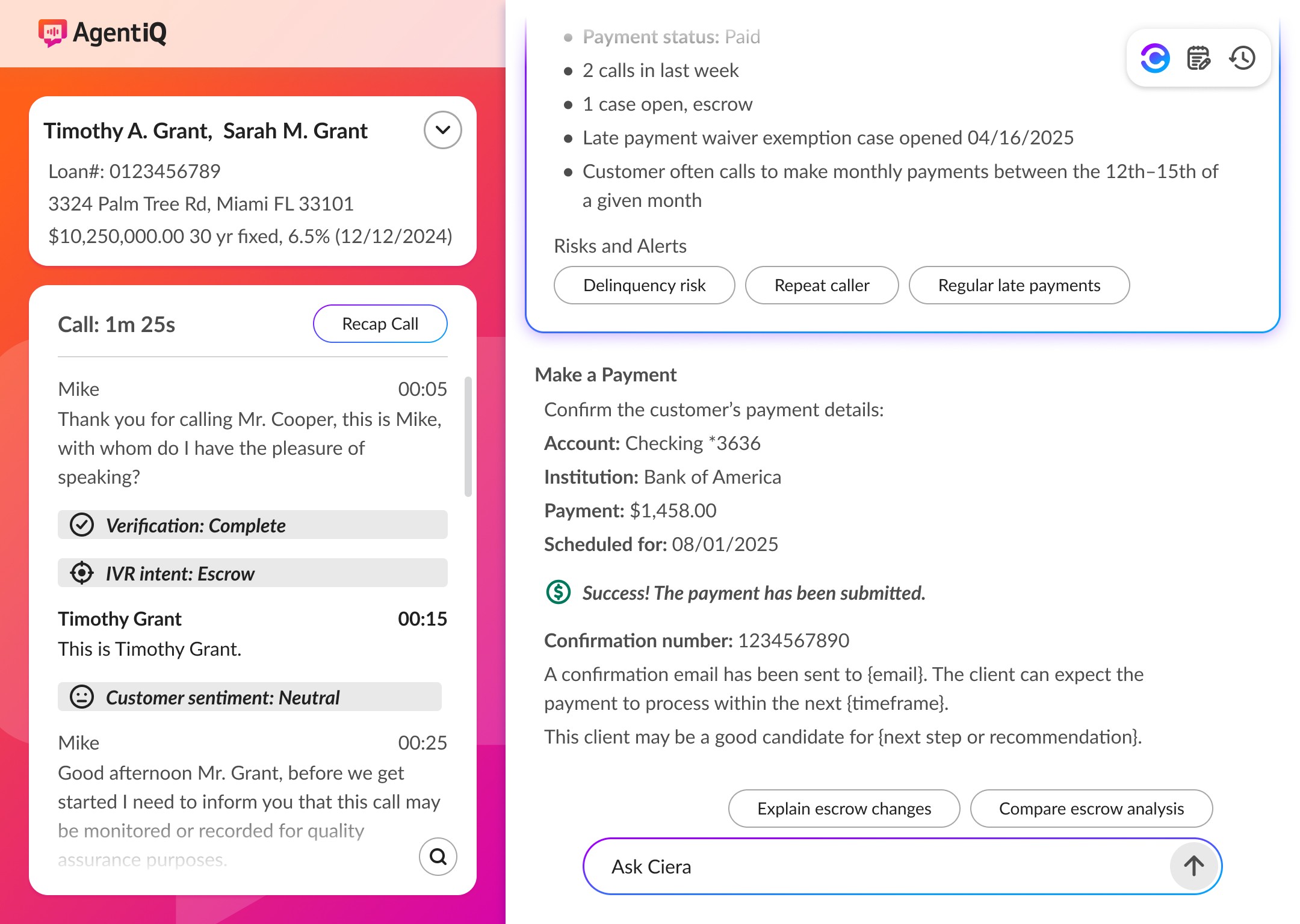
AgentIQ used an agentic AI framework that orchestrated workflows in real time. As a call unfolded, the platform assembled the right information, triggered the right actions, and surfaced the right next steps based on what was actually happening. The interface had to move with the call. That meant designing for change as the default state, with clear signals and smooth transitions rather than rigid steps.
BUILDING TRUST IN AI GUIDANCE
Agents were on live calls with borrowers who could be stressed or frustrated. Introducing AI-generated guidance into that environment required careful thought about how recommendations would land.
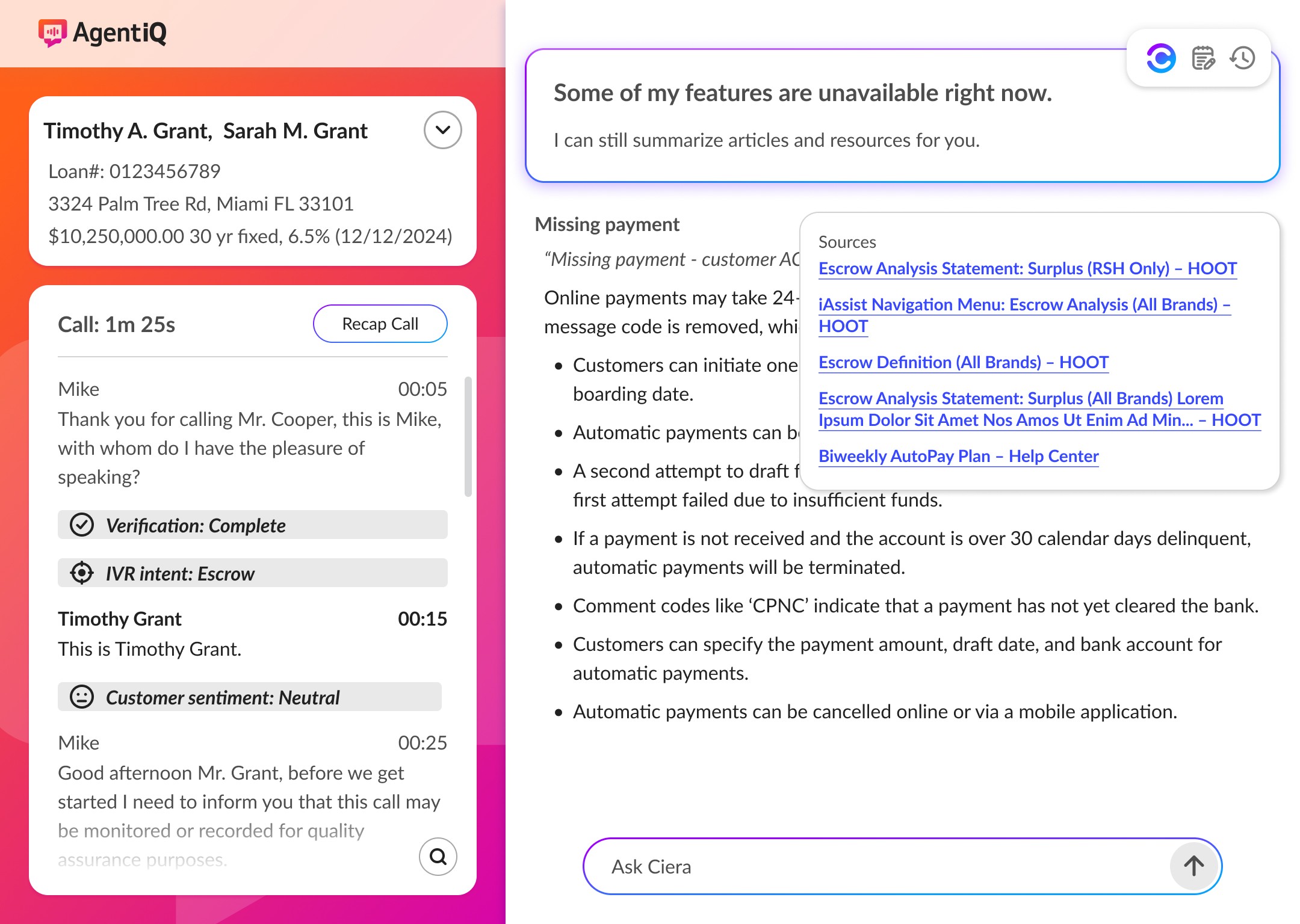
A suggestion without context would not work. Agents needed to know where information was coming from and why a next step was being recommended, enough visibility to act quickly when the tool was right, and enough control to override it when their judgment called for something different. The design gave them both. Transparency was the mechanism for trust, not a feature bolted on after the fact.
AUTOMATED CALL DOCUMENTATION
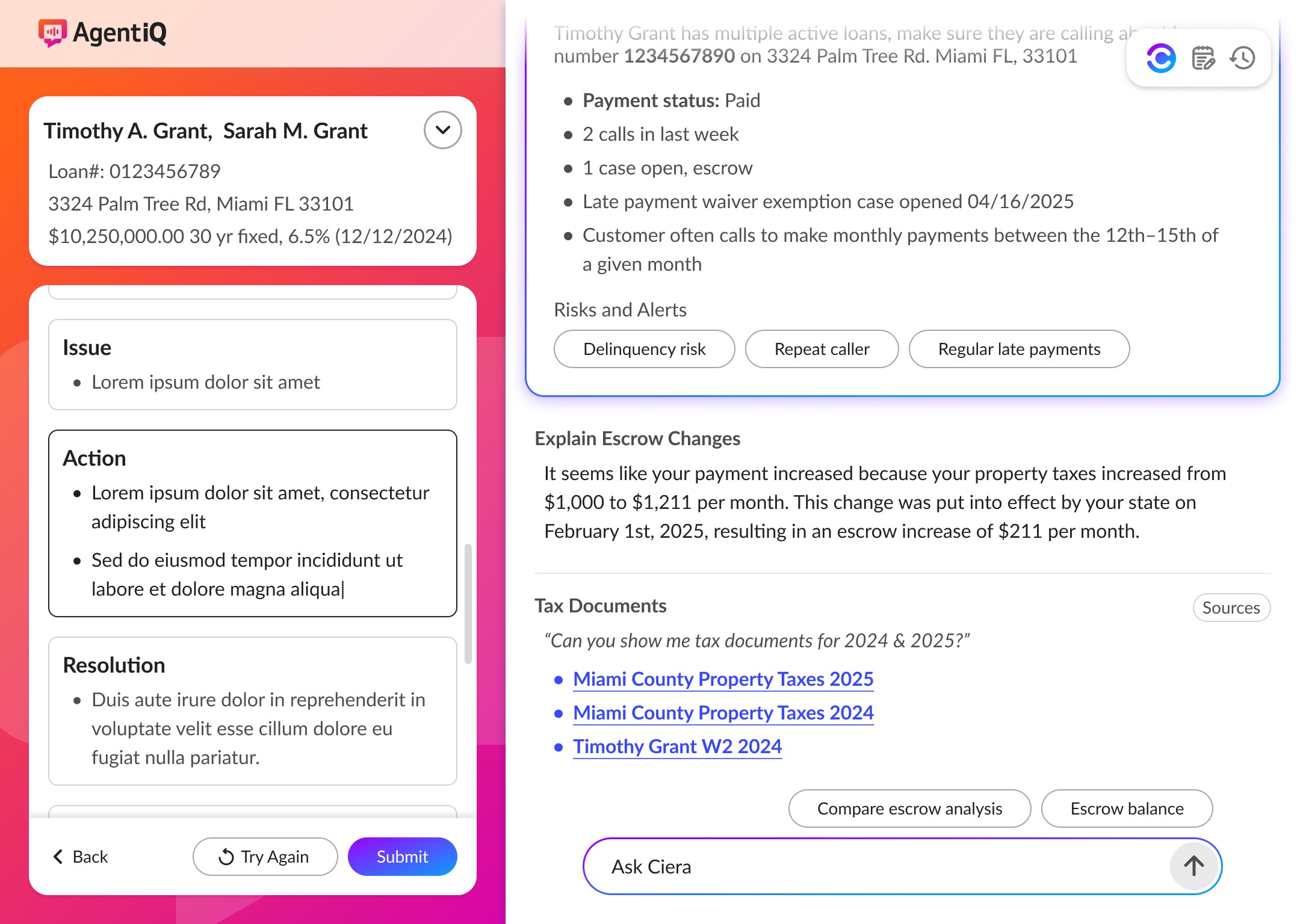
After every call, agents were expected to manually document the interaction before moving to the next one. Under constant pressure to keep queues moving, notes were rushed, inconsistently structured, and filled with shorthand. The result was a call record that was difficult to act on and impossible to analyze at scale.
AgentIQ generated a structured call summary automatically from the live transcript. Agents shifted from authoring notes under pressure to verifying an output that was already correct. The time savings were immediate. The standardized records also became the data foundation for QualityHQ, enabling quality analysis at a scale that previously was not possible.
OUTCOMES
$19.7M in identified annual benefit potential.
Piloted with live agents and real customers, with a full production rollout planned.
End-to-end product design from discovery through live pilot with real customers.
Design system and component library supporting multiple agent types and interaction surfaces.
Standardized call records enabled QualityHQ quality analysis at scale.
NEXT
Native iOS and Android app · 18-person team · 6 Golden Stevie Awards